How to Find Gentle Dental Care in NYC for Dental Anxiety
11/16/2026
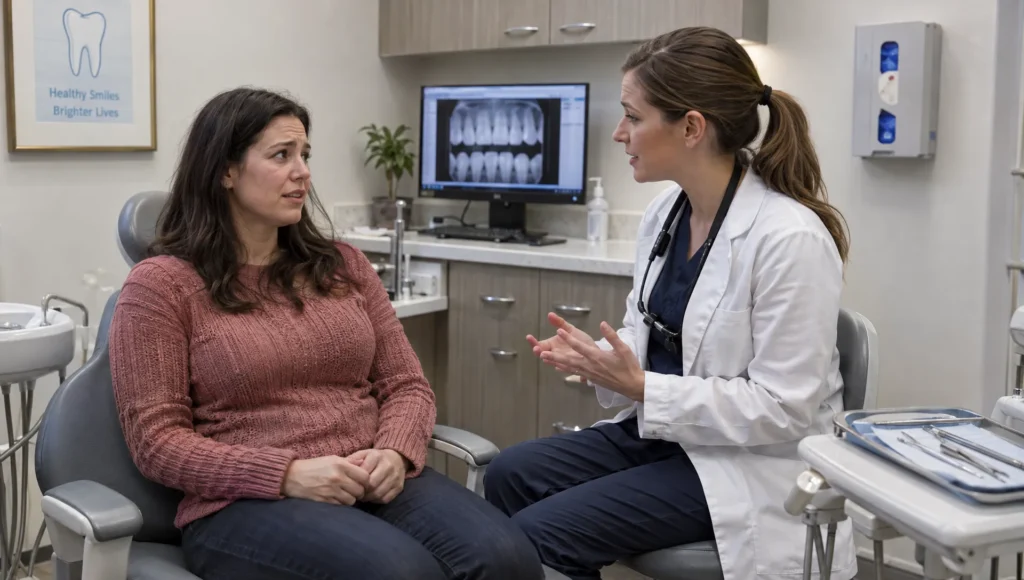
Finding gentle dental care starts with more than choosing an office that promises a comfortable experience. If you have dental anxiety, you need to know how the team will respond when you feel overwhelmed, how discomfort will be managed and whether you can pause treatment without having to explain yourself.
You do not have to stop feeling anxious before making an appointment. A more useful goal is to find a dentist who takes your concerns seriously and helps you agree on a manageable first step. Here is how to assess that approach before you sit in the chair.
Start by naming what makes you anxious
Dental anxiety is not always a fear of pain. You might worry about needles, gagging, unfamiliar sounds, feeling trapped or being judged for how long it has been since your last visit. A previous difficult experience can also make an ordinary examination feel threatening.
Try to identify the part you most want handled differently. “I need warning before the chair moves” gives a practice more useful information than “I am nervous,” although either is enough to start the conversation.
You do not need to disclose details of a traumatic experience to request accommodations. You can simply explain what helps you feel safer, such as staying more upright, hearing an explanation before each step or taking breaks. Write this down if speaking about it feels difficult.
What does gentle dental care actually involve?
The term is not a standardized clinical credential. Look for specific behaviors rather than relying on reassuring language, attractive surroundings or promises of a completely painless visit.
The American Dental Association’s patient guidance on dental anxiety recommends sharing your concerns and agreeing on a signal when you need a break. A practice should be able to explain how that works during an actual appointment.
| What to look for | What it means in practice |
|---|---|
| Clear explanations | The dentist describes the next step and asks before proceeding |
| A workable pause signal | You agree on a signal, such as raising your hand, and discuss how treatment will pause safely |
| Attention to discomfort | The team checks numbness and reassesses if you report pain |
| Respectful communication | Your concerns are heard without criticism about missed appointments |
| A paced treatment plan | Urgent needs are distinguished from treatment that can be scheduled later |
A calm room can help, but it cannot replace consent or responsive care. Be cautious if a practice dismisses your questions, guarantees that nothing will hurt or pressures you to commit to elective treatment before you understand the findings.
Ask practical questions before booking
When comparing gentle dental care options, ask how the practice supports anxious patients, not simply whether it sees them. The answers should help you understand what can be arranged and what may depend on the examination.
Useful questions include:
- “Can you note my anxiety before the appointment?” Ask whether your concerns can be shared with the clinical team so you do not have to repeat them from the beginning.
- “What would the first visit involve?” Find out whether a discussion-focused visit is possible and what examination or imaging might be recommended.
- “Can we agree on a stop signal?” Ask how the dentist handles requests to pause during treatment.
- “What happens if I am not numb enough?” Listen for a willingness to stop, assess and adjust the plan.
- “Which anxiety-management options do you provide?” Ask about availability and suitability rather than assuming sedation is offered.
You can use a simple script: “I have dental anxiety and have put off care. My main concern is losing control during treatment. Before I book, can you explain how the dentist handles breaks and discomfort?”
The response matters. Staff do not need to promise that every request is possible, but they should explain limitations respectfully rather than brushing your concerns aside.
Understand pain control and sedation
For many patients, gentle dental care means knowing there is a clear plan if something hurts. Local anesthesia and sedation serve different purposes, so ask the dentist to explain them separately.
Local anesthesia addresses pain
Local anesthesia numbs the area being treated. You may still notice pressure, vibration or movement, but sharp pain is a reason to signal the dentist and have the situation reassessed.
Ask whether a topical anesthetic is appropriate before an injection and how the dentist checks that the area is adequately numb before starting. The right technique depends on the procedure and your clinical circumstances. Do not assume you must tolerate pain because treatment has already begun.
Sedation addresses anxiety and awareness
Sedation may be an option for some patients, but it is not necessary for everyone and does not automatically replace local anesthesia. Different methods affect alertness differently, and suitability depends on your health, medications and the procedure.
Ask who administers and monitors sedation, what preparation is required and whether you will need an escort or restrictions on driving afterward. Follow the practice’s specific instructions rather than assuming every method has the same rules.
Do not use alcohol, someone else’s medication or extra doses of your own medication to get through an appointment. Tell the dentist about prescribed medicines, supplements and any history of sleep apnea so they can assess the plan safely.
Make the first appointment manageable
Your first visit for gentle dental care should have a clear purpose. That might be understanding a painful tooth, completing an assessment or discussing how to restart routine care after a long gap. It does not have to mean agreeing to every recommended procedure that day.
Before the visit, ask what is scheduled and whether treatment might be proposed. Once you arrive, confirm your main concern and agree on how explanations and breaks will work. If you prefer to hear only the essentials rather than a detailed description of instruments, say so.
Sensory adjustments may also help. Ask about headphones, a quieter appointment time or a chair position that feels easier to tolerate when clinically appropriate. These are requests to discuss, not features to assume every office can provide.
If cleaning is your main trigger, explain whether the difficulty is sensitivity, scraping sounds or discomfort around the gums. You can also learn about how Air-Flow cleaning differs from conventional cleaning, then ask which methods suit your oral health. Air polishing does not replace every type of cleaning or periodontal treatment.
Before leaving, agree on one next step. A written summary can make it easier to remember the findings without having to process everything while anxious.
Keep deadlines from rushing your decisions
Start with an assessment rather than assuming you need whitening, bonding or veneers. The dentist can explain what is necessary, what is elective and what can realistically be completed without rushing.
If you are considering an appearance-focused procedure, these checks for choosing a cosmetic dentist in NYC can help you evaluate qualifications and treatment planning. You can ask for time to consider elective recommendations instead of deciding during an anxious appointment.
Recognize when you need additional anxiety support
Even with gentle dental care, some people experience panic, intrusive memories or repeated cancellations. That does not mean they have failed or that the dental team has necessarily done something wrong. The fear itself may need treatment alongside the dental problem.
A licensed mental health professional can help you explore approaches such as cognitive behavioral therapy, which addresses patterns of fear and avoidance. Gradual exposure may also be part of a treatment plan, with manageable steps agreed in advance rather than being forced into an overwhelming situation.
Tell your dentist if anxiety is preventing you from attending or completing care. With your permission, your dental and mental health clinicians may be able to coordinate support.
Sedation can make a particular procedure more manageable, but it may not resolve the underlying fear. For longer-term progress, focus on repeatable experiences in which you understand the plan and your boundaries are respected.
Do not wait through signs of an urgent problem
A discussion-focused first visit can be helpful when your condition allows it. Pain, swelling or possible infection may require a faster assessment.
Seek prompt dental care for facial swelling, suspected infection or persistent severe tooth pain. If you have difficulty breathing, swallowing or speaking, or swelling around the eye with vision problems, seek emergency medical care.
Tell the office about both your symptoms and your anxiety when you call. An urgent problem still deserves clear explanations and attention to your comfort, even when delaying treatment is not advisable.
Frequently asked questions
Does gentle dental care mean I need sedation? No. Explanations, a pause signal, suitable local anesthesia and changes to pacing may be enough for some patients. Sedation requires an individual assessment and is not available or appropriate in every setting.
Can I ask for a consultation before agreeing to treatment? Yes. Ask what consultation options are available and what they include. A dentist may still need an examination or imaging to make useful recommendations, particularly if you have pain or other symptoms.
What if I feel embarrassed about not seeing a dentist for years? Say this when booking if you can. You deserve respectful care regardless of the gap. An assessment establishes your current needs rather than requiring you to justify the past.
Can I stop treatment if I panic? Agree on a signal beforehand. The dentist may need a moment to remove instruments or reach a safe stopping point, but your request should be acknowledged. Discuss how you would like to proceed afterward rather than assuming you must continue immediately.
Take the next step in Flatiron
Maison BE Dental is a female-founded dental studio at 156 5th Ave in Manhattan’s Flatiron District, offering general, cosmetic and restorative dentistry. Virtual consultations and online appointment scheduling are available.
When contacting Maison BE Dental, explain your main anxiety trigger and ask which accommodations can be arranged before booking. You can also call (212) 518-3815 to discuss an appropriate starting point. The first goal is a clear plan you understand, not a commitment to complete everything at once.