Air-Flow Cleaning: What It Is and Who It’s For
10/7/2026
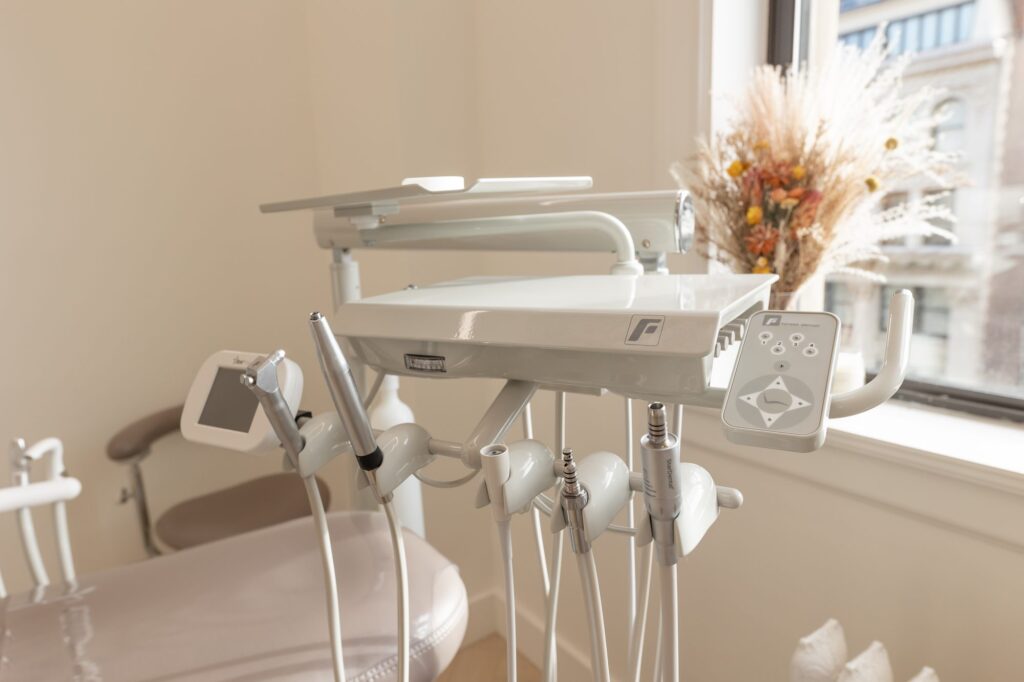
Most people picture a dental cleaning as scraping followed by polishing: a scaler for the hard deposits, then a spinning rubber cup with gritty paste to buff the surface. Air-Flow is a different way of doing the second half, and for some patients a different way of doing most of the visit.
Instead of a cup pressed against the tooth, it uses a fine stream of air, warm water and a mild powder to lift plaque, soft build-up and surface stain off the enamel without the instrument touching the tooth at all. It is quieter, it reaches places a cup cannot, and it is gentle enough to use around implants, restorations and orthodontic attachments.
What is actually in the spray
The powder is the part people ask about. It is either erythritol, a sugar alcohol used as a sweetener, or sodium bicarbonate, which is baking soda. At Maison BE it is erythritol. Both are very fine and both dissolve. Mixed with warm water and carried by compressed air, the stream is strong enough to lift stain and soft deposits and mild enough that it does not scratch enamel or the glaze on a porcelain restoration.
Because nothing solid touches the tooth, there is no friction and no heat. That is the main reason patients who dislike the vibration and grit of a conventional polish tend to prefer it.
How it differs from a rubber-cup polish
A rubber cup with prophy paste does one thing well: it buffs the flat surfaces of the teeth. It struggles with everything else. It cannot get between teeth, into the small pockets where the gum meets the tooth, or around brackets, wires and aligner attachments. Those are exactly where plaque collects.
The air-and-water stream is shaped rather than pressed, so it follows the contours of the tooth and reaches into those spaces. In practice that means a more complete clean in the areas that a brush at home also misses, and less irritation at the gum line afterwards.
What it is not is a substitute for the first half of the visit. Hard, mineralised tartar still has to be removed with a scaler. Air-Flow deals with the soft layer and the stain on top of it. Your hygienist decides on the day which combination your teeth need.
Who it suits
Anyone with surface stain. Coffee, tea, red wine and tobacco leave a film that a brush cannot lift. It is the most common reason people notice their teeth look dull rather than white, and it is the thing Air-Flow removes most visibly. If you have looked at whitening but your teeth are mostly stained rather than genuinely darker underneath, a clean is the first step, and sometimes the only one you need.
Implant patients. The surface of an implant and the crown on top of it should not be scraped with steel instruments, and a paste polish does not reach the gum margin around them well. A non-contact spray is the right tool for maintaining dental implants without marking them.
Invisalign and orthodontic patients. Aligner attachments, brackets and wires trap plaque, and cleaning around them with a cup is slow and incomplete. The spray cleans around them in one pass. If you are partway through Invisalign, it is already part of your cleaning here.
Patients with sensitive teeth or receding gums. No pressure, no heat and no grit means less of what usually makes a cleaning uncomfortable.
Anyone about to start cosmetic work. Shade for bonding or veneers is chosen against your teeth as they are on the day. Surface stain shifts that reading darker than the tooth underneath. A thorough clean first means the match is made to your real tooth colour, and it means KöR whitening, if you go on to it, starts from a clean surface rather than working through a layer of stain.
What it does not do
It is worth being clear about this, because “stain removal” and “whitening” get used interchangeably and they are not the same thing.
Air-Flow removes what is sitting on the enamel. It does not change the colour of the enamel itself. Teeth that are genuinely darker, from age, from medication, or from the way they formed, will look cleaner and brighter after a session but will not change shade. That is what whitening is for, and it is a separate decision. If you are unsure which applies to you, the dental exam before the cleaning is where that gets answered.
It also does not repair anything. A chipped edge, a dark line at the margin of an old filling, or a single tooth that has discoloured on its own will still be there afterwards. Those have their own solutions; our post on how composite bonding addresses tooth stains covers the single-tooth case.
What a visit is like
At Maison BE, Air-Flow is part of every cleaning; there is nothing to request separately. The powder is erythritol, which is low in abrasiveness and is used both above and below the gumline. It is gentle on gum tissue, enamel, restorations, implants and orthodontic appliances, and it has antimicrobial properties. The polishing itself takes about 15 minutes. The whole cleaning takes about an hour and often includes an exam, which happens at least once a year.
Afterwards, teeth feel smooth in the way they do after any good cleaning, and the difference in surface stain is visible straight away. There is nothing to avoid afterwards and no recovery.
Questions worth asking
- Is my discolouration surface stain, or is it in the tooth? Which would a cleaning fix, and which would need whitening?
- Do I have tartar that needs scaling first, and how much?
- Is Air-Flow safe for the restorations, implants or attachments I have?
- If I am planning bonding or veneers, should the cleaning happen before the shade is chosen?
Questions patients ask
Is Air-Flow cleaning the same as teeth whitening?
No. Air-Flow lifts plaque, soft build-up and surface stain off the enamel with a stream of air, warm water and a fine powder. It does not change the colour of the enamel itself. Teeth that are genuinely darker will look cleaner afterwards but will not change shade; that is what whitening is for, and it is a separate decision.
Should I have a professional cleaning before teeth whitening in NYC?
Yes, and before bonding or veneers too. Shade is chosen against your teeth as they are on the day, and surface stain shifts that reading darker than the tooth underneath. A thorough clean first means whitening starts from a clean surface and a bonding or veneer shade is matched to your real tooth colour.
Is Air-Flow safe with implants, veneers or Invisalign attachments?
It is suited to them. At Maison BE the powder is erythritol, which is low in abrasiveness and gentle on restorations, implants and orthodontic appliances. Nothing solid touches the tooth, so there is no friction and no heat: implant surfaces are not scraped, the glaze on porcelain is not scratched, and the spray reaches around brackets, wires and aligner attachments that a rubber cup cannot.
Maison BE Dental Studio is at 156 5th Avenue, Suite 900, in the Flatiron District. To arrange an exam and cleaning, call (212) 518-3815 or book online. Read more about Air-Flow polishing on the treatment page.